


9 Event Data Capture Ideas Using DMA Experiences That Drive Measurable Insights
As technology races forward, it's changing how we gather information in practical ways. Event data capture ideas are becoming important across industries, helping businesses fine-tune services and products to better meet customer needs. This means that getting accurate and actionable data is critical for success. With new technology making an impact, methods like Digital Mirror Applications (DMA) are emerging as tools in this space. DMA is reshaping how organizations understand and interact with data, allowing them to gain insights more efficiently and effectively.
At the heart of this shift is DMA, which represents a blend of technology and creativity for data collection. It offers a structured way to gather, interpret, and use data during live experiences. With DMA, the process of data acquisition becomes more streamlined and more useful for decision-making, supporting event data capture. Industry reports indicate that 90% of event marketers consider data capture a key metric for event success, reinforcing the importance of these solutions.

How Do DMA Experiences Capture Data at Events?
DMA, short for Digital Mirror Applications, is a technology that supports event data capture ideas through interactive engagement. DMA acts as a system that collects multiple data points and converts them into usable insights. This is achieved through experiences designed to engage users beyond traditional surveys or manual entry within brand activations.
Here’s an example: A brand launch event might use DMA to engage attendees through interactive displays that gather real-time feedback. These setups both entertain and collect information on participant reactions and preferences. This kind of immediate feedback allows brands to adjust messaging and engagement strategies during the event.
DMA experiences can include virtual simulations, interactive kiosks, and advanced photo or video capture systems. These setups are designed to attract participation while collecting structured data. Studies show that interactive experiences can increase participation rates by up to 70%, making them effective for capturing higher-quality data.
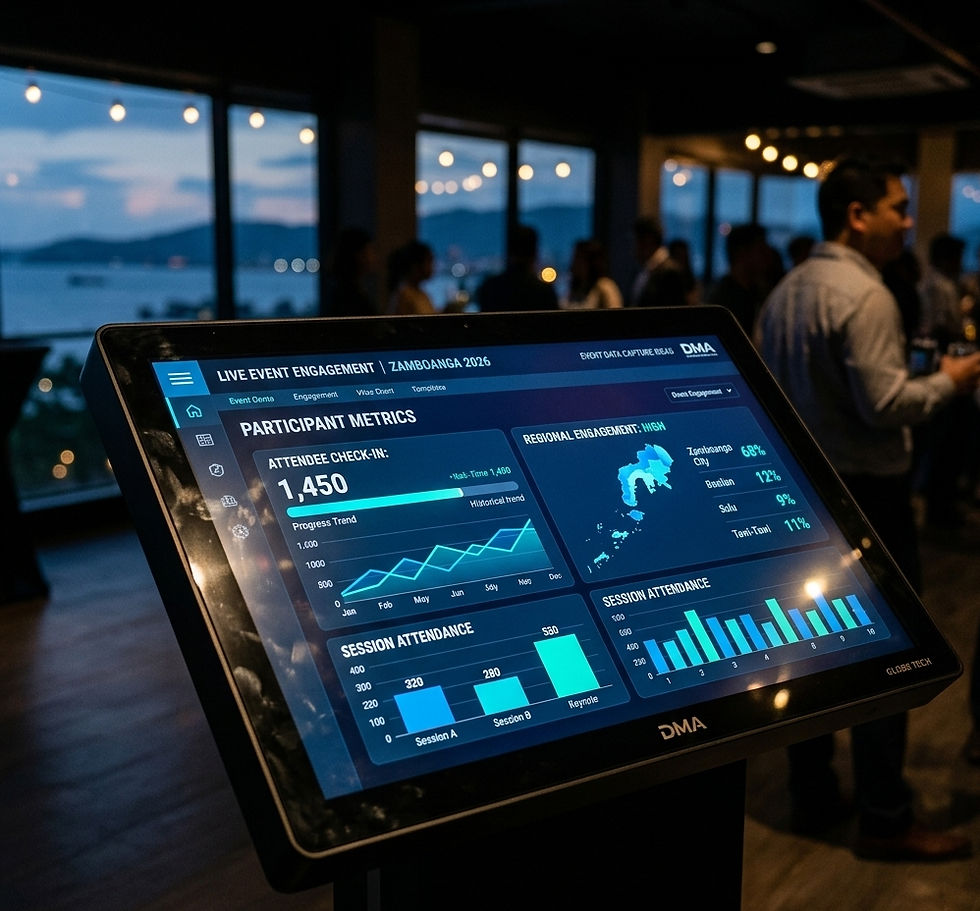
Event Data Capture Ideas vs Traditional Data Collection Methods
Traditional data collection methods often rely on forms, surveys, or manual input, which can limit participation and accuracy. Event data capture ideas using DMA improve this process by integrating data collection into the experience itself for corporate events.
Standard approaches may result in incomplete or delayed data. In contrast, DMA captures information in real time, reducing delays and improving accuracy. This allows event teams to respond quickly and make adjustments while the event is still active.
Another difference is engagement. Traditional methods require effort from attendees, while DMA encourages interaction through activities. This leads to higher response rates and more reliable insights. Research shows that real-time data collection can improve decision-making speed by up to 5 times compared to post-event analysis.

What Role Do DMA Experiences Play in Event Data Capture?
DMA plays a defined role in executing event data capture ideas by combining engagement with analytics. During events, DMA systems collect data such as user preferences, interaction time, and participation patterns without interrupting the attendee experience.
This information helps event planners and brand agencies understand how audiences interact with different elements of the event. It also provides measurable insights that can be used for reporting and future planning.
After the event, the collected data becomes a resource for marketing teams. It can be used to refine campaigns, personalize follow-up communication, and improve future event strategies. Reports indicate that 80% of marketers use event data to guide future campaigns, showing the long-term value of structured data capture.
Why Event Data Capture Ideas Using DMA Matter for Business Strategy
Event data capture ideas supported by DMA provide clear benefits for organizations aiming to improve performance and engagement.
One of the primary advantages is real-time insight. Businesses can access data immediately, allowing them to adjust messaging, staffing, or engagement tactics during the event.
Another benefit is improved data accuracy. Automated systems reduce human error and ensure consistent data collection across all interactions.
DMA also supports personalization. By understanding attendee preferences, brands can tailor experiences and follow-up communication more effectively. Studies show that personalized marketing can increase conversion rates by up to 20%.
These benefits make DMA a practical solution for organizations looking to connect event performance with measurable outcomes.
How Are Event Data Capture Ideas Applied Across Industries?
Different industries are adopting DMA-based event data capture ideas in ways that match their goals.
Retail companies use DMA to analyze customer behavior in-store. Interactive displays help track which products receive the most attention, allowing teams to adjust merchandising strategies.
Healthcare organizations are beginning to use DMA to monitor engagement and interaction. This helps improve communication and tailor services based on user behavior.
Event and experiential marketing teams use DMA to measure engagement levels, dwell time, and participation rates. This data helps justify event investment and improve future planning.
Across industries, the ability to capture and apply data in real time is becoming a standard requirement rather than an added feature.
What Trends Are Shaping Event Data Capture Ideas With DMA?
As we move further into 2025, several trends are influencing how event data capture ideas evolve through DMA experiences.
One trend is the integration of DMA with artificial intelligence. AI systems can analyze collected data instantly and identify patterns, improving how insights are generated and applied.
Another trend is the use of augmented reality in DMA setups. AR allows users to interact with digital elements in physical spaces, creating a more engaging way to collect data.
Real-world applications highlight these trends. Museums are using DMA to gather visitor feedback through interactive exhibits, improving future displays based on actual user behavior.
These developments indicate that event data capture ideas will continue to evolve alongside emerging technologies.
How Do Event Data Capture Ideas Support Digital and Real-Time Marketing?
Event data capture ideas play a direct role in supporting digital marketing strategies. By collecting data during live interactions, brands can extend engagement beyond the event itself.
Captured data can be used for email campaigns, retargeting, and personalized content delivery. This improves the efficiency of marketing efforts and increases return on investment.
Real-time data also allows brands to adapt campaigns while the event is ongoing. For example, engagement metrics can indicate which activations are performing well, enabling teams to focus resources accordingly.
Reports show that companies using real-time data are 23 times more likely to acquire customers, highlighting the importance of integrating data capture into event strategies.
What Is the Future of Event Data Capture Ideas With DMA?
Looking ahead, DMA is expected to remain central to event data capture ideas as technology continues to evolve. Enhanced interactivity and automation will likely define future developments.
As AI and AR technologies expand, DMA systems will become more adaptive and accessible. This will allow organizations to collect deeper insights while maintaining a simple user experience.
The future will also see stronger integration between event data and broader marketing systems. This will enable seamless data flow across platforms, improving how insights are used across campaigns.
With continued innovation, DMA will remain a key component of data-driven event strategies.


Comments