


Roaming vs. Booth Experiences: What Really Drives Engagement
Rethinking Event Engagement Beyond the Photo Op
Roaming vs booth experiences are a real debate in experiential marketing activations, especially in planner forums and Reddit-style threads. People want to know what actually drives interaction on site, not just what looks good in a deck. The honest answer is that both roaming and fixed setups work, but for different types of engagement and different event goals.
At DMA Events, based in Toronto and working with brands across Canada and beyond, we design both mobile and fixed experiential photo experiences. In this article, we break down what roaming vs booth engagement really looks like, where each format wins, and how to choose the right mix so you are not just collecting pretty photos; you are driving meaningful interaction and ROI.
What Engagement Really Means at Experiential Events
Before we pick a side in the roaming vs fixed debate, we need to agree on what “engagement” actually means. At live events, not every interaction is equal. Some guests simply pass by, others jump in for a quick snap, and a smaller group become real brand advocates.
We tend to think of engagement in three layers:
Passive engagement, guests walk by, watch others interact, or record a quick story of someone else at your activation. They are aware of your brand, but they do not necessarily step in.
Active engagement, guests participate directly; they pose, record a clip, scan a QR code, enter a contest, or share their contact details.
Extended engagement, guests share branded content later, tag the brand, use a campaign hashtag, or return to the experience for a second or third round.
Roaming and booth setups generate different mixes of these layers. Roaming often wins on volume and spontaneity, while booths usually deliver more structured content, richer data capture, and more deliberate sharing. When we measure experiential marketing activations, we look at metrics that work for both formats, such as:
Participation rate compared to total event attendance
Dwell time, how long people stay engaged at the experience
Number and quality of shares or downloads
Lead capture and opt-ins, where applicable
By tracking the same KPIs across roaming and fixed builds, planners can compare options fairly instead of going with whichever format simply “feels” busier.
Roaming Experiences Turn the Event Floor Into a Stage
Roaming experiences are all about mobility. Think mobile photographers with instant-sharing tablets, handheld 360 or video capture, AR filters on tablets or phones, or brand ambassadors carrying compact light rigs. Rather than asking guests to come to a device, we bring the experience to them.
For engagement, roaming has some clear advantages:
High approachability for shy or time-pressed guests, a friendly photographer walking up is far less intimidating than a queue.
The ability to seek out high-energy zones, VIPs, and peak moments like award wins or product reveals.
Flexible coverage for large venues, conferences with multiple rooms, and events where the crowd is constantly moving.
The trade-off is that roaming is fast and fluid, so we need smart systems behind the scenes. Capturing consent, emails, or opt-ins on the move requires clear tech flows, simple interfaces, and well-trained teams. Branding has to be baked into more touchpoints too, such as:
Clear logos on cameras, tablets, lanyards, and uniforms
Consistent branding on the microsite or gallery guests receive
Branded share pages and email templates that connect the spontaneous photo to the broader campaign
Done well, roaming experiences feel organic and guest-focused, while quietly collecting valuable content and data for the brand.
Booth Setups as Anchor Points for Deeper Brand Immersion
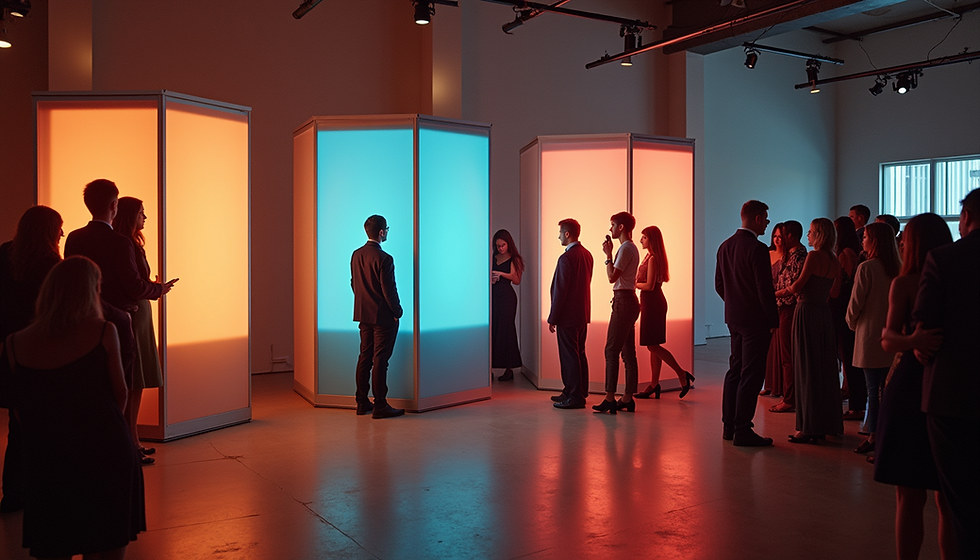
Booth setups are fixed destinations within your event. This could be a fully branded photo booth, a slow-motion or confessional video booth, an immersive set build, a green screen world, or a custom installation designed around your campaign story. Here, the environment is controlled and intentional.
For engagement, booth experiences deliver different strengths:
A clear destination that guests plan to visit, talk about, and bring friends or colleagues to.
Control over lighting, framing, props, and creative direction, which means consistent, high-quality content.
Strong opportunities to layer in quizzes, surveys, or contest mechanics that turn a fun moment into a structured data capture touchpoint.
Because guests need to decide to walk over, booths generally attract fewer total interactions than roaming, but those interactions tend to be more deliberate. A well-placed booth often:
Encourages group shots, team photos, and repeat visits as the event goes on
Serves as a visual landmark that shapes the environment and reinforces your brand presence
Creates “hero moments” that people are proud to share, especially when the set design feels premium or cinematic
For experiential marketing activations focused on brand storytelling, positioning, or VIP treatment, that extra layer of immersion can be more valuable than sheer volume.
Roaming vs Booth Engagement, When Each Wins
So, roaming vs fixed: what works better, and what gets interaction? The answer depends heavily on the event format and what you want to achieve.
At trade shows and conferences, roaming teams excel at discovery. They can approach attendees between sessions, on the show floor, or at networking mixers, driving a high number of interactions and capturing candid content. A booth, on the other hand, shines as a base for more qualified conversations, richer data capture, and planned demos or experiences.
At galas, product launches, and VIP events, roaming is ideal for capturing energy in motion, red carpet walk-ins, table moments, and spontaneous reactions. Booth setups give you prestige shots, like a branded media wall or an immersive set where guests can take their “official” photo for the night.
At festivals and public activations, roaming teams help cover large outdoor spaces and constantly shifting crowds. Meanwhile, a fixed booth becomes a social media magnet and meeting point, a place people use as a reference when they talk about the event and share content.
Some of the most effective experiential marketing activations we produce use a hybrid strategy, for example:
A roaming team teases the main set and hands guests cards or QR codes inviting them to visit the booth for a “hero shot”.
Quick roaming captures feed into a live gallery at the booth so people see themselves on a screen, then walk over for more.
Roaming content warms up the audience, while the booth anchors contests, deeper data capture, and longer storytelling.
Hybrid formats do require more planning around budget, staffing, footprint, power, and venue permissions, so we help clients decide how to allocate resources between mobility and immersion.
Choosing the Right Mix for Your Next Activation
When you are choosing between roaming and booth formats, start with the basics. What is the primary goal? If it is pure awareness and reach, roaming usually gives you more touchpoints. If it is data capture and qualified leads, a structured booth workflow can be more effective. If you are prioritizing VIP treatment and premium content, a curated booth or set design is often the better anchor.
Next, consider the event style:
Is the crowd mostly seated or constantly moving?
Is the venue tight or spacious, indoor or outdoor?
Are there natural gathering points where a booth would shine, or do you need to go to the guests?
Brand personality matters too. High-energy, playful brands often lean into roaming content that feels spontaneous and social. Brands that want a polished, cinematic look may put more weight on a fixed installation with controlled lighting and audio.
Some common mixes we see work well include:
100% roaming for short receptions, walk-around events, and mobile tours where a fixed footprint is not practical.
100% booth for flagship launches, media walls, press conferences, and moments where you want a single iconic backdrop.
Hybrid roaming plus booth for large-scale experiential marketing activations where you want both reach and depth, discovery and destination.
Whichever direction you take, the real win is alignment. When your engagement format matches your objectives, event flow, and brand personality, roaming vs booth is no longer a debate. It becomes a set of tools you can combine strategically to generate the kind of interaction that actually matters: meaningful, memorable, and measurable.
Get Started With Your Project Today
If you are ready to turn ideas into memorable brand moments, our team at DMA Events is here to help plan and execute impactful experiential marketing activations tailored to your goals. We collaborate closely with you to understand your audience and design experiences that feel authentic, engaging and measurable. Share a few details about your next event and we will recommend a clear path forward, from concept through to on-site delivery. To start the conversation, simply contact us and we will follow up with concrete next steps.


Comments