


Sephora’s A+ Beauty Campaign Shows How Experiential Marketing Can Turn Product Discovery Into an Experience
- studio2581
- 7 days ago
- 4 min read
Sephora decided to rewrite the shopping list.
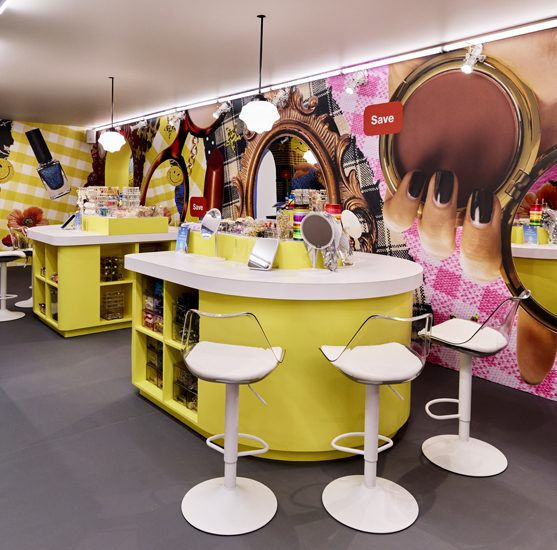
For its A+ Beauty campaign in California, Sephora and Salt XC transformed the familiar school dining hall experience into an immersive beauty activation designed around discovery, personalization and participation. Instead of simply displaying products, guests were invited to move through an experience where beauty essentials became the new back-to-school supplies.
It is a great example of where experiential marketing is heading: brands are no longer asking consumers simply to look at a campaign they are inviting them to become part of it.


Turning a Familiar Ritual Into a Brand Experience
One of the smartest elements of the A+ Beauty activation was the creative concept itself.
The traditional school cafeteria journey was reimagined as a beauty discovery experience. Guests received a student ID badge, picked up a tray and moved through different beauty touchpoints, choosing products and building their own collection of A+ Beauty Essentials.
Featured brands included Sol de Janeiro, Tower 28 Beauty, Glossier and Kérastase, integrating multiple products into one cohesive consumer journey rather than treating each as a separate sampling station.
At the end of the experience, guests received additional Sephora Collection samples, a branded notebook, laptop stickers and refreshments.
Everything connected back to the central back-to-school concept.
And that's what makes experiential marketing powerful.
The environment becomes part of the message.
Instead of telling guests that Sephora should be part of their back-to-school routine, the activation physically placed Sephora inside that routine.
Why Experiential Brand Activations Work
Consumers—especially younger audiences—are surrounded by digital advertising every day.
A physical brand activation creates something different.
It creates a moment.
Guests aren't simply watching content on their phones. They're walking into the campaign, interacting with products, discovering brands, taking photos, receiving personalized items and creating content of their own.
That shift from audience to participant is one of the biggest advantages of experiential marketing.
DMA Events sees the same principle across modern corporate events, trade shows, festivals and product launches: the strongest activations give guests something meaningful to do, create, discover or share.
Modern photo experiences, for example, can turn guests into branded content creators while extending campaign visibility beyond the physical event through social sharing. DMA explores this further in our guide to how photo booths increase engagement at events.
Personalization Makes the Experience More Valuable
Another important lesson from the Sephora campaign is the role of personalization.
Receiving a student badge, selecting products and building an individual collection gives guests a sense of ownership over the experience.
Instead of:
“Here is our product.”
The interaction becomes:
“Here is your experience with our brand.”
That distinction matters.
Personalization can be expanded even further through modern event technology.
Brands can incorporate experiences such as:
Personalized photo IDs and event badges
AI-generated portraits
Custom trading cards
AI video experiences
Personalized beauty or fashion imagery
Branded digital content
QR-powered guest journeys
Social sharing experiences
Custom merchandise
Live engraving and personalization
The goal isn't technology for technology's sake. The technology should make the guest more involved in the story.
From Product Sampling to Content Creation
Product sampling remains an effective way to introduce consumers to something new.
But the next generation of product sampling combines the physical product with a content moment.
Imagine extending a beauty activation like this with a branded AI photo experience.
After discovering their products or completing a makeover, guests could step into an AI experience and be transformed into their own:
Beauty campaign cover.Fashion editorial.Back-to-school yearbook portrait.Magazine cover.Luxury cosmetics advertisement.
Within seconds, the consumer becomes the star of the brand's creative campaign.
That personalized image can then be delivered digitally and shared socially—allowing the experience to continue long after the guest leaves the activation.
DMA's AI-powered group and branded photo experiences are designed around exactly this type of personalized content creation.
Designing Activations for Gen Z
The Sephora A+ Beauty experience also demonstrates an important principle when marketing to younger audiences:
Don't interrupt the culture. Build something that belongs inside it.
Back-to-school is already a familiar social ritual.
Sephora simply changed what "school supplies" could mean.
That creates an activation guests immediately understand while still giving the brand room to surprise them.
For marketers targeting Gen Z, successful experiential campaigns often combine:
A recognizable cultural moment + personalization + discovery + an Instagram/TikTok-worthy visual + a takeaway.
When these pieces work together, an activation can become much more than an event installation.
It becomes a content engine.
The Future of Brand Activations Is Participatory
The Sephora A+ Beauty campaign is another great example of the evolution happening across experiential marketing.
Consumers don't simply want to be marketed to.
They want to participate.
They want to discover something.
Create something.
Personalize something.
Photograph something.
And ultimately leave with something worth remembering—or sharing.
For event agencies and brand marketers, that means thinking beyond the traditional booth.
The question is no longer:
“What should we put in the space?”
A better question is:
“What do we want the guest to experience, and what will they want to tell someone about afterward?”
That is where the best brand activations begin.
Build Your Next Brand Activation With DMA Events
At DMA Events, we help agencies, brands and event planners build interactive experiences designed around participation, content creation and memorable guest engagement.
From AI photo booths and AI video experiences to custom trading cards, Glambot, event robots, live personalization, photo activations and QR-powered engagement, DMA can develop an activation around your campaign rather than forcing your campaign into a standard event package.
Whether you're planning a beauty launch, retail activation, campus campaign, festival experience, product launch, trade show or national brand activation, our team can help turn the creative idea into an experience guests actually want to participate in.
Have an idea? Bring us the brief. We'll help build the experience.

Comments