


You Only Have Seconds to Grab Attention at Live Events
Stop-Scroll Moments in Real Life
At live events, you are not competing with other booths first; you are competing with people’s phones. On a trade show floor or at a festival, guests are “scrolling” with their feet, and your activation either earns a stop in a few seconds or it gets skipped. Those first moments decide whether you collect data, spark conversation and generate shareable content, or simply become part of the background.
In this article, we are going to unpack how to grab attention fast, what works instantly, what fails, and what reliably stops people in their tracks. As an experiential marketing services agency based in Toronto, we design interactive brand activations, photo and AI content booths, and technology-driven live experiences that are built around one core idea: you need an event attention strategy for the first 3 to 5 seconds, or the rest of your planning will not matter.
The Psychology Behind the First Glance
Attention at events follows many of the same rules as attention on social feeds. People scan, not study. They look for a clear focal point, emotional payoff and a simple path to interaction. If those are missing, they keep walking.
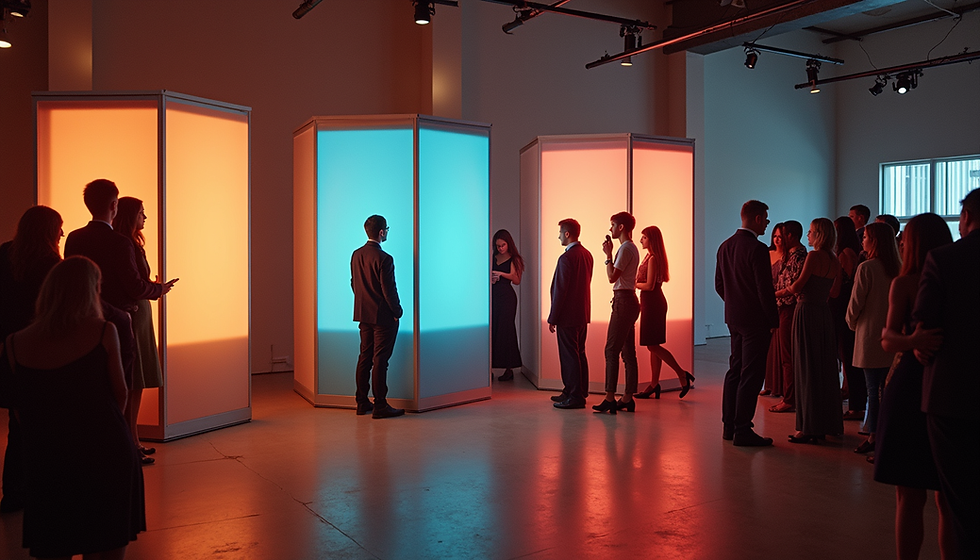
Visual hierarchy is the starting point. Guests should be able to tell, in a single glance from several metres away, that something is happening in your space. That means a big, obvious focal element, strong contrast, clean lines and intentional lighting that cuts through the visual noise of the event. Movement, whether it is dynamic LED content, kinetic structures or live action, signals that this is not just another static booth.
Emotion is next. Curiosity, surprise, delight and status are all powerful hooks. A strange or playful visual, a surprising effect or a clearly VIP-style moment triggers people to think, “what is that?” or “I want that photo too.” FOMO is real on show floors, and experiential marketing services can turn that show-floor instinct into a lineup instead of a walk-by.
Attention is also sensory. Bold sound cues, lighting changes, large-scale screens, interesting textures and even scent can all act as pattern interrupts in a hall full of similar-looking setups. When we design photo and AI content booths or interactive sets, we think in layers: what they see first, what they hear and what they can physically touch as soon as they approach.
What Works Instantly at Events
So what actually works in those crucial first seconds? From our work with brand activations and experiential builds, a few attention hooks consistently show up as winners.
Signature visuals are one. Guests are drawn to:
Oversized objects that feel larger than life
Dynamic LED or projection content that clearly reacts and changes
Kinetic installations that move, rotate or respond to people nearby
Bold branded backdrops that frame a perfect photo in an instant
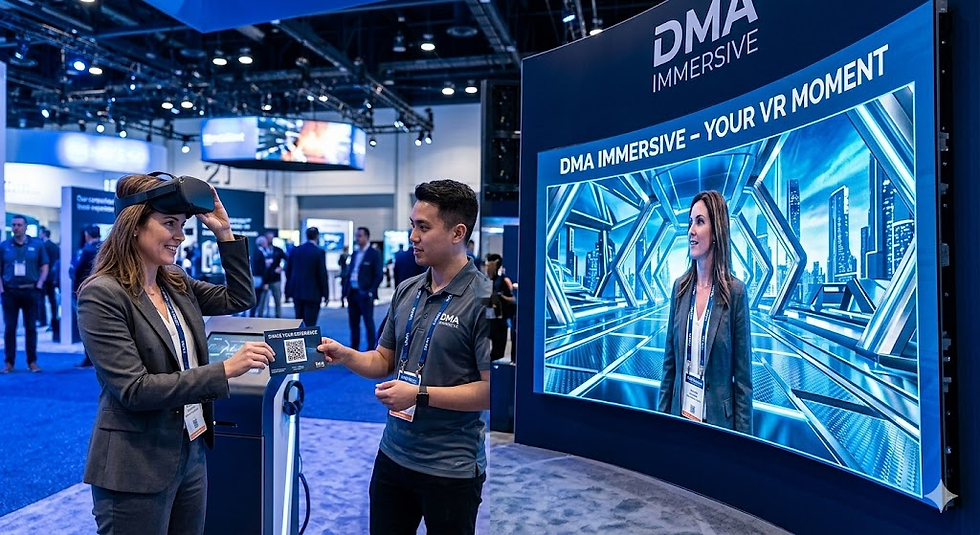
The first touch matters just as much. If someone reaches your space and nothing responds, you lose momentum. Interactive screens that say “tap to start”, gesture-based visuals that react when they move, AR filters that appear as soon as they step into a zone and instant photo or AI content that begins processing the second they trigger it all communicate speed and payoff.
Social magnetism also works incredibly well. People trust other people’s reactions more than any tagline. Lines that look worth waiting for, guests laughing or posing, and live displays of user-generated content create a sense that your experience is the place to be. A wall of real-time photos or AI remixes, for instance, instantly shows what you are offering without a single long sentence.
Under all of this sits micro storytelling. From several metres away, guests should be able to understand “what this is” and “why I should care” through a single line of copy, a simple icon or a visual metaphor. If that story requires a paragraph to decode, it is too slow.
Why People Keep Walking Past
Understanding what fails is just as important as knowing what works instantly. Many brands invest heavily in presence but leak attention in the first few seconds through simple, avoidable issues.
Common problems look like this:
Cluttered booths with too many small elements competing for focus
Confusing messaging, with long descriptions instead of a clear promise
Small signage that is only readable once guests are already inside
Slow loading tech or experiences that have no obvious starting point
Passive setups are another attention killer. A static backdrop with no motion, staff members staring at tablets, weak lighting and sound that blends into the background all send the message that nothing special is happening here. Without an obvious call to action, even interested guests will hesitate and drift away.
Friction also drives people on. Complicated instructions, long forms before any fun, unclear flows about where to enter and exit or tech that makes guests feel clumsy will all shorten dwell time. In our work providing experiential marketing services, we often see good ideas struggle because the first interaction is buried behind three steps of admin instead of one moment of delight.
These are not theoretical issues. Any event attention strategy that relies on people “figuring it out” on their own is almost guaranteed to leave value on the floor. Cleaning up visual noise, simplifying copy and speeding up the path to interaction can transform an underperforming activation without changing the core idea.
Designing the Freeze Moment
If the first glance earns a pause, the next challenge is creating a freeze moment, the split second where someone actually stops their feet. This is where pattern interrupts, visible transformation and human interaction come together.
A pattern interrupt is simply breaking the unwritten visual rules of the room. If everyone is using horizontal screens, a tall vertical LED column stands out. If most booths use straight lines, a circular or unexpected shape pulls eyes. This does not have to be expensive, it just has to be clearly different from the surroundings.
The “I need to try that” trigger usually comes from visible transformation. People are fascinated by before and after. AI remixes that turn a live photo into something unexpected, slow motion captures that freeze a leap or a confetti moment, or green screen worlds that instantly transport guests into a branded environment all make the payoff tangible, even to onlookers.
Real-time feedback loops keep energy high. Live leaderboards, photo walls that auto-update with each new capture and instant email or SMS content that guests see mirrored on nearby screens create a sense of movement and social proof. The activation feels alive, not fixed.
Staffing and scripting are the final layer. Hosts, brand ambassadors and photographers can make or break your event attention strategy. Open body language facing the aisle, short one-line invitations like “Want a free AI portrait in 30 seconds?” and the ability to read when someone is curious but hesitant all contribute to more freeze moments and fewer missed opportunities.
Building an Event Attention Strategy That Leads to Action
All of this comes together in a deliberate event attention strategy, rather than a collection of isolated ideas. Start by clarifying when attention matters most for your brand. Is it in entry zones, along high-traffic aisles, during stage changeovers, or around red carpet style arrivals and networking hours?
From there, map the first 10 seconds of a guest’s journey with your activation. At roughly 3 metres, what do they notice first? At 1 metre, what becomes clear that was not visible before? At the interaction point, how fast can they trigger something that feels rewarding? Many of our experiential marketing services are designed with this layered view: a quick win for walk-by traffic, a deeper interaction for those who step in and shareable content for guests who choose to stay longer.
Turning glances into lasting impressions means thinking past the selfie. Every photo, AI output or short clip can support data capture, brand storytelling and post-event remarketing, as long as the experience itself is fast, clear and enjoyable. When brands audit their current setups through the lens of the first 5 seconds, it becomes easier to spot where attention leaks are happening and where a more intentional, technology-driven live experience could keep people from walking past.
Get Started With Your Project Today
If you are ready to turn your next campaign into a memorable live experience, our team at DMA Events is here to help. Explore our experiential marketing services to see how we can design and deliver tailored activations that fit your brand and audience. We will collaborate with you from initial concept through execution so every detail supports your goals. Have questions or a project in mind already? Contact us and let’s start planning.

Comments