


Stop Guest Hesitation Cold by Fixing the First Interaction
- Digital Mirror Experiences
- May 31
- 5 min read
Event setup confusion is one of the fastest ways to kill the energy around a brand activation. Guests walk up, slow down, and you can see the thought bubble over their heads: “Is this for me? Where do I stand? What do I touch?” If they hesitate for more than a few seconds, the line backs up, the space feels awkward, and your experiential marketing services never get to show what they can really do.
At DMA Events, we design interactive photo, video, and tech-driven experiences across Canada, and we see the same pattern again and again. The first interaction makes or breaks everything that comes after. In this article, we will walk through how to spot unclear setups, why hesitation spreads so quickly, and how to design physical layouts, staff scripts, and tech interfaces that quietly guide guests from curiosity to confident action.
Why the First 10 Seconds Matter so Much
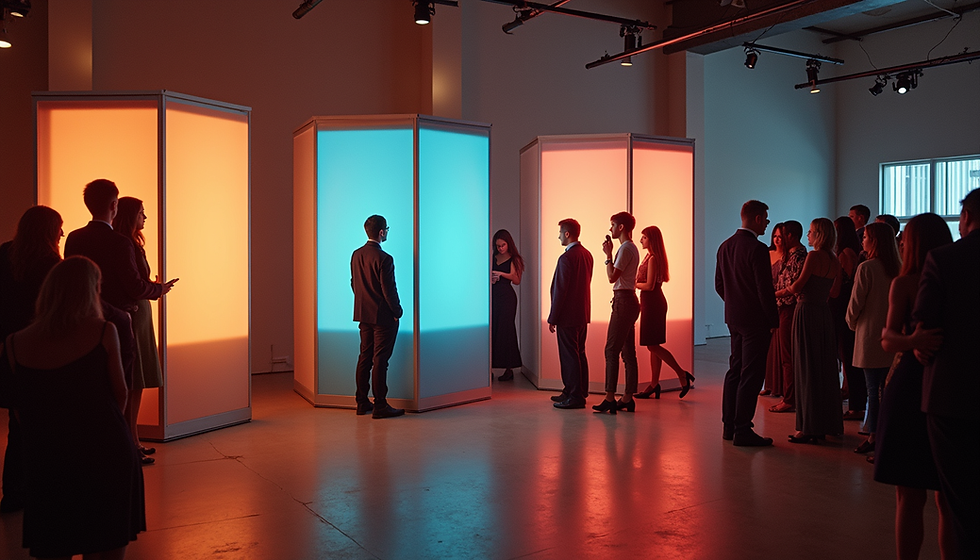
Event setup confusion often starts with good intentions. You have impressive tech, fun props, maybe a branded backdrop and a few screens. Guests approach and get hit with a wall of visual information. Without a clear starting point, they stall. Do they talk to someone first? Do they tap the screen? Do they grab a prop?
That first unsure guest sets the tone. When one person hesitates, the person behind them copies their body language. The queue slows, conversation drops, and the experience looks more stressful than fun. Instead of people excitedly sharing content, your experiential marketing services are stuck answering basic “What do I do?” questions.
The antidote is simple in theory: make the first interaction so obvious that guests almost cannot get it wrong. That means thinking about sightlines, signage, lighting, staff placement, and on-screen prompts as one system, all pointing to a single clear action.
Spotting Confusing Setups Before Guests Arrive
The best time to fix event setup confusion is before doors open. We like to map the guest journey from across the room. If someone is 10 or 20 steps away, what do they notice first, second, and third?
Ask yourself:
From a distance, can guests tell what the activation is generally about?
Within a few seconds, can they answer “What is this?”
Within a few more seconds, can they answer “What do I do first?”
If the answers are not obvious, there is work to do.
Common confusion triggers include:
Cluttered layouts where props, tech and signage all compete for attention
No clear entry or exit, so guests are not sure where to join or where to leave
Staff hidden behind kiosks, chatting in a corner, or looking busy with devices
Screens that look interesting but give no instructions, or too many options at once
Multiple experiences crammed into one area with overlapping lines and noise
Before the event starts, we recommend a quick, honest test. Walk the floor as if you have never seen the activation. Keep your hands off everything and see what your body naturally does. Better yet, ask a few people who were not involved in planning to try it cold and describe exactly where they hesitate, look around for help, or ask “Uh… now what?” Those moments are gold, because they show you what real guests will feel.
Designing a Clear Path From Curiosity to Action
Once you know where confusion creeps in, you can design a smoother path from “What is this?” to “That was awesome.” Start with the physical flow. A strong layout usually includes:
A visible, clearly branded “start here” zone
A natural, intuitive queue that is easy to join and easy to understand
A separate “finished” area where guests can review content, share, or grab swag without blocking the next group
Think of it like blocking a scene in theatre. You want the movement to feel natural, not forced. Floor decals, simple arrows, and lighting can quietly pull people along without constant verbal direction.
When it comes to signage, verbs beat labels every time. “Tap to begin,” “Pose here,” “Scan your badge,” or “Hold your card here” are far more effective than just “Registration” or “Photo Booth.” Keep text short, large, and high-contrast. Guests do not want to read paragraphs; they want one clear instruction.
Great experiential marketing services choreograph the whole flow. Lighting can brighten at the “start here” circle, then shift slightly as guests progress. Screens can change visuals as they complete each step. Props can be staged in the order they will be used, not piled randomly. Every element says, quietly but confidently, “Here is what happens next.”
Guiding Guests with People, Not Just Signs
Even with a strong layout and signage, humans still look for other humans when they feel unsure. That is why brand ambassadors are so important. We think of them as live user manuals, able to erase hesitation with a smile, a gesture, and one clear sentence.
Good scripting is short and specific. Compare:
Jargon-heavy: “So this is an interactive photo activation powered by our proprietary software, and you can select from multiple modes…”
Clarity-first: “Welcome! Step on the circle, look at the camera, and I will count you down.”
The second line tells guests exactly what to do, in what order, and what will happen. Once they are in motion, you can add details about branding, features, or prizes.
To prepare staff to handle unclear setup moments, build in training that includes:
Rehearsing peak times, with multiple guests approaching at once
Role-playing shy, confused, or sceptical participants
Practising a one-sentence “hook” followed by a quick demo
Encouraging staff to physically show the interaction, not just describe it
When ambassadors confidently demonstrate, even hesitant guests quickly mirror that behaviour.
Making Tech and Interfaces Intuitive
The most visually impressive activation can stall if the user interface is confusing. Small buttons, vague icons, too many choices, or cluttered screens all create friction. Guests who are unsure will either freeze, poke randomly, or hand the device back to staff.
We favour human-friendly interfaces that match how people naturally behave at events:
One primary button to start, in a clear position on the screen
Large type and high-contrast colours, readable in event lighting
Short instructions that mirror what staff say out loud
Clear progress bars so guests know where they are in the flow
When tech and physical cues work together, hesitation drops fast. For example, a screen could say “Step on the circle” as the floor decal in front lights up slightly. A countdown timer can appear both on screen and in the lighting or audio cue, so guests feel guided from multiple directions. Immediate feedback like a quick preview, a sound, or a light change tells guests “You did the right thing, keep going.”
Turning Confusion Into Confident Experiences
No activation is perfect the first time. Instead of treating every unclear setup or “I am not sure what to do” moment as a failure, treat it as live data. Note where guests stall, where staff keep repeating the same instructions, or where lines bunch up. After the event, adjust layout, signage, scripts, or UI to remove those friction points.
The core fix is simple: make the first interaction painfully obvious. Align physical layout, staff behaviour, and tech prompts so they all point to the same first action. Test that flow until hesitation shrinks to almost nothing. When you do, your experiential marketing services can focus less on basic wayfinding and more on delivering the memorable, shareable experiences your brand deserves.
Get Started With Your Project Today
If you are ready to turn your next campaign into a memorable live experience, our team is here to help you plan and execute every detail. Explore our experiential marketing services to see how DMA Events can support your goals across Canada. We will work with you to design impactful activations that align with your brand, audience, and budget. Have questions or want to discuss a specific idea? Contact us to get started.


Comments