


Turning Spectators Into Superfans at Experiential Activations
Why People Just Watch at Activations
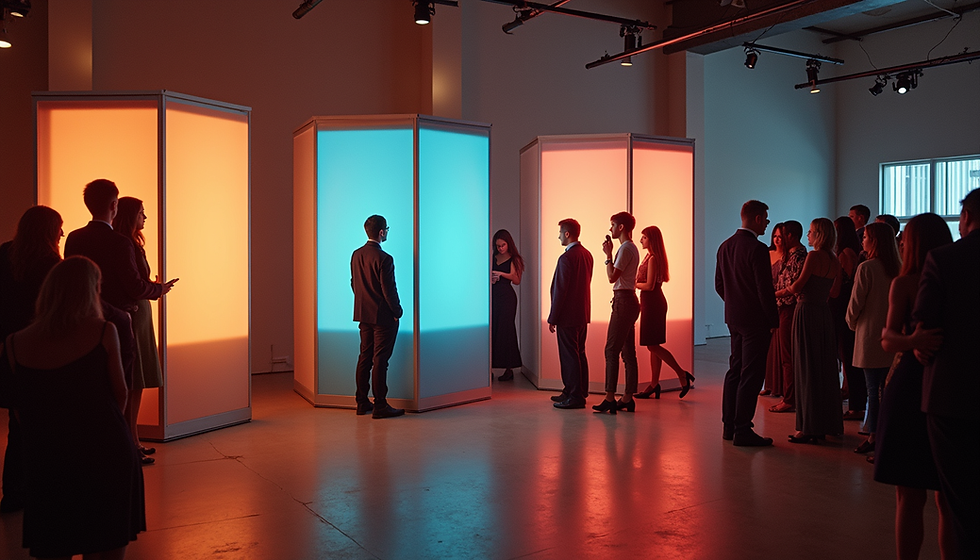
Crowds are not the same as engagement. Many experiential marketing activations pull big foot traffic, attract a semi-circle of phones, and still struggle with a quiet core where very few people actually join in. That gap between attention and action is what we call the activation participation problem.
The activation participation problem shows up as long lines beside empty experiences, curious glances that never turn into sign-ups, and beautiful builds that mostly live in the background of someone else’s selfie. It is not about bad ideas. It is about missing the small cues that help people feel safe, clear, and motivated enough to step in.
Psychologically, watching always feels easier than joining. People worry about looking awkward on camera, not understanding what to do, or getting stuck in a long flow. At busy events, they are also juggling noise, schedules, and social plans, so their decision-making energy is already low. If your activation asks them to think too hard or take social risks without a payoff, they stay on the sidelines.
Even high-budget experiential marketing activations underperform when they ignore these participation triggers. A stunning build that is confusing, intimidating, or unclear will get a lot of “That looks cool” and very little “I’m in.” Our focus in this article is practical: how to move real people, in real crowds, from passive spectators to active superfans using tactics we see work on site across Canada and beyond.
What Actually Triggers Action in a Live Crowd
When we break down why someone finally steps over that invisible line from watching to joining, a handful of motivators show up again and again: curiosity, social proof, status, rewards, and emotional resonance.
Curiosity kicks in when something feels slightly mysterious but not confusing. A screen that reacts to a wave, a sound that changes when someone moves, or a live content station that shows unexpected AI effects will naturally pull people closer. Social proof matters just as much. Once there is a visible first participant, and the crowd sees how simple and fun the interaction is, you can feel the energy shift.
Status and rewards sit on top of that. People want content they are proud to share, that feels unique, flattering, or creatively personalized. Rewards do not have to be big prizes. They can be:
A VIP moment on a screen or stage
A limited-time digital collectible or filter
A branded clip that looks professionally produced
A small, on-the-spot physical keepsake
Emotional resonance ties it all together. If the experience taps into joy, nostalgia, empowerment, or community, people feel more comfortable stepping in. This is where AI-driven photo and video experiences shine. When someone sees their own face, movement, or style transformed in a clever, personal way in seconds, the content becomes social currency. It is not just another brand photo. It is a piece of their identity that they want to post.
Small signals change behaviour in big ways. A brand ambassador doing the experience first, a crystal-clear “Start Here” sign, or a marked first footprint on the floor makes it obvious where to begin. A simple on-ramp, like a low-stakes first pose or quick prompt, helps people test the water before committing to a full experience.
Designing for Join-in Behaviour
Participation starts with physical design. People should know where to stand, what to look at, what to do first, and roughly how long it will take within a few seconds. If they cannot read the flow while walking by, they will not stop. Sightlines, spacing, and clear zones for queueing, shooting, and sharing all reduce perceived effort.
We think of interaction levels in two broad buckets. Quick “tap and go” experiences are ideal for high-traffic environments or audiences on tight schedules. They solve the activation participation problem by removing excuses: easy entry, instant output, low commitment. Deeper immersive experiences ask more of people but can create stronger emotional payoff. Here, you need extra clarity, stronger social proof, and visible hosting by staff so the journey feels guided, not overwhelming.
Inclusive design is a participation multiplier. When different ages, abilities, cultures, and comfort levels can see a place for themselves in your activation, your pool of potential joiners grows. That might mean:
Clear language and symbols, not just clever slogans
Seating or accessible positions for guests who prefer not to stand
Volume levels that are exciting but not overpowering
Options for people who are camera-shy but still want to engage
The goal is not to force everyone into the same interaction; it is to give multiple paths into the same story.
From Awkward to Addictive on Site
Even with strong planning, you might still see that classic scene: a big ring of spectators, very few participants. This is where live tweaks matter. Often, small adjustments turn awkward energy into addictive participation.
Useful on-the-ground fixes include:
Repositioning staff so they face the flow of traffic, not just the activation
Moving or simplifying signage so the action verbs are clear and visible
Adjusting lighting so the key zone feels like a stage, not a dark corner
Shortening the journey by cutting an unnecessary step or screen
Brand ambassadors are your human magnets. The way they talk, move, and celebrate people creates momentum. Ambassadors who confidently demo the experience, narrate what is happening, and personally invite spectators by name or body language will convert more onlookers. Loud, sincere celebration of each participant, from applause to quick playback moments, signals to the crowd that joining is low-risk and high-reward.
Live content stations and AI photo or video experiences are especially flexible here. If the crowd is more silly than serious, prompts and overlays can shift to match that tone. If people are hesitating, staff can suggest easier formats, like solo poses instead of group choreography, or shorter capture loops. Treat your content as something you can tune to the room, not a fixed script.
Measuring and Optimizing Participation in Real Time
To fix the activation participation problem, we have to measure more than raw impressions. Useful indicators of a healthy experiential activation include participation rate, dwell time, repeat visits, and content shares. Participation rate shows how efficiently you convert foot traffic into active guests. Dwell time reveals whether people feel engaged or stuck. Repeat visits and re-shoots are strong signals that the experience is addictive.
On-site, we pair numbers with observation. If a certain prompt on your AI photo booth is getting more laughter and more posts, that is a natural A/B test winner. If a reward mechanic is slowing down the line or confusing guests, re-frame the offer or move that step to the exit. Even simple changes to phrasing on your call-to-action, like flipping from “Register to participate” to “Step in, and we will guide you in 30 seconds”, can shift behaviour.
Higher participation feeds straight into stronger ROI for experiential marketing activations. More people joining means more branded content created, more organic social reach, and more first-party data where appropriate. It also deepens brand recall, because people remember experiences they actively lived, not just backdrops they walked past.
Turning Every Activation Into a Participation Engine
When we stop designing things to look at and start designing moments people can own and share, everything about an activation changes. Instead of asking “Does this look impressive?”, we ask “Would a real person feel confident stepping into this in front of their friends, and would they be excited to show the result?”
A simple participation-first checklist helps keep that focus during planning and live days:
Can a passerby understand what to do in under five seconds?
Is there a clear, visible “first move” that feels easy and safe?
Are staff actively modelling the experience and inviting people?
Do guests get something personal and shareable, quickly?
Are we watching, measuring, and tweaking based on real behaviour?
When brands, agencies, and event planners build with these questions in mind, the activation participation problem starts to fade. At DMA Events in Toronto, our work centres on turning that ring of spectators into a steady flow of superfans, one clear cue, welcoming ambassador, and share-worthy AI-driven moment at a time.
Get Started With Your Project Today
If you are ready to turn big ideas into memorable real-world experiences, we can help you plan and deliver impactful experiential marketing activations that fit your brand and audience. At DMA Events, we collaborate closely with your team to shape concepts, logistics, and on-site execution so everything feels seamless and intentional. Share your goals with us and we will recommend an activation approach tailored to your objectives and budget. To discuss next steps or request a quote, contact us today.


Comments